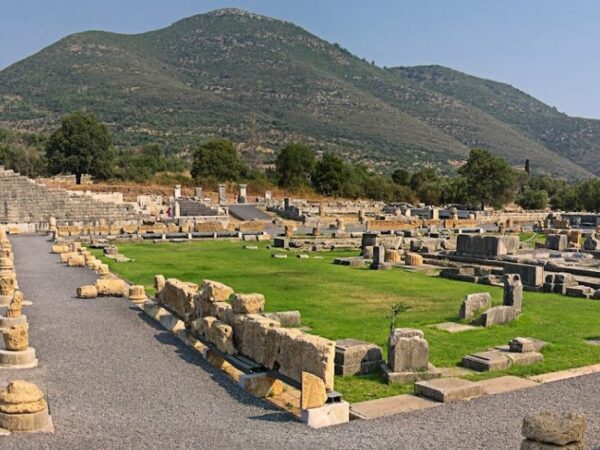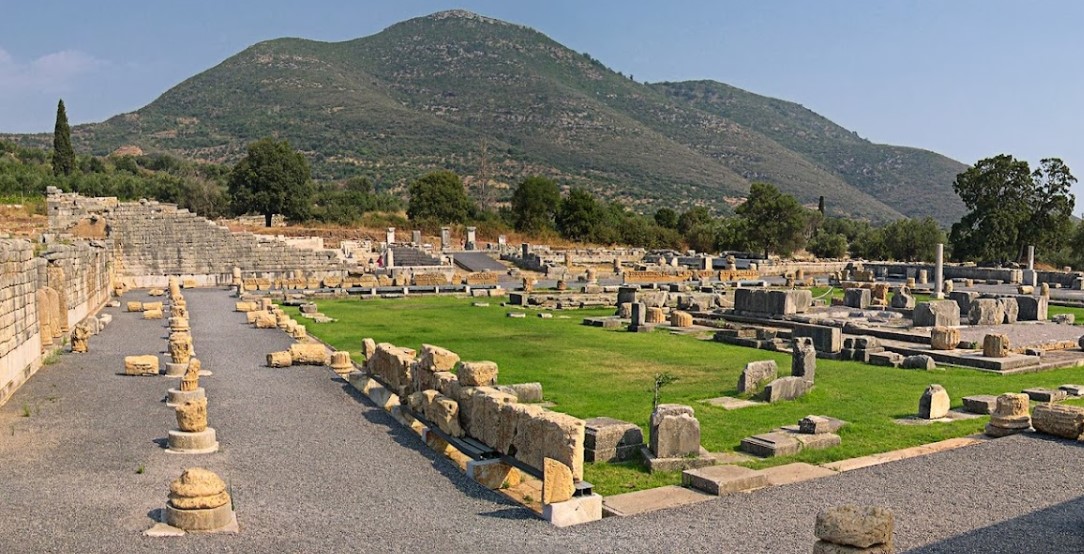
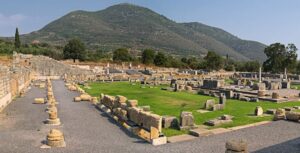
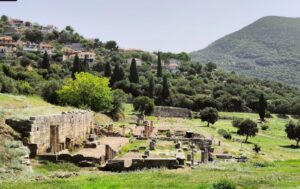
Ancient Messina is an exceptionally well-preserved and magnificent archaeological site. It combines elements from the Ancient Oracle at Delphi and the sacred site of Ancient Olympia.
The city of Messina reached its peak in the 4th century BC after the defeat of the Spartans by the Theban general Epaminondas, who put an end to the centuries-old hegemony of Sparta. It was never completely destroyed. Thus, by observing its ruins today, we can form an excellent picture of life in ancient times.
The findings that have come to light - some believe that they constitute a little more than a third of the ancient city - include an ancient theater, the agora and the gymnasium, sanctuaries, temples, statues, springs and residences, many of which "take flesh and blood" through the narratives of Pausanias.
The design and construction of the archaeological site relied on the architectural skill of Hippodamus of Miletus. The structure of Ancient Messina has since become the precursor of modern urban planning, while it brought excellent fortification walls that helped to secure and preserve the monument, as we see it today.
"The Archaeological Site of Messina is the most important archaeological site in Messinia & one of the most important in all of Greece"
Theater
It is the first monument you encounter upon entering the archaeological site. Built in the 3rd-2nd century BC, it is considered one of the most important examples of ancient theater construction. Its capacity reached 10,000 spectators and it was used for both political gatherings and entertainment. Today, it is used for various cultural events and festivals.
Asclepius
This area with its four internal arcades, which ended in a courtyard, is described by Pausanias more as an exhibition of bronze statues and other works of art than as an ordinary hospital of Asclepius, like those that have been discovered in other cities.
The Heroium
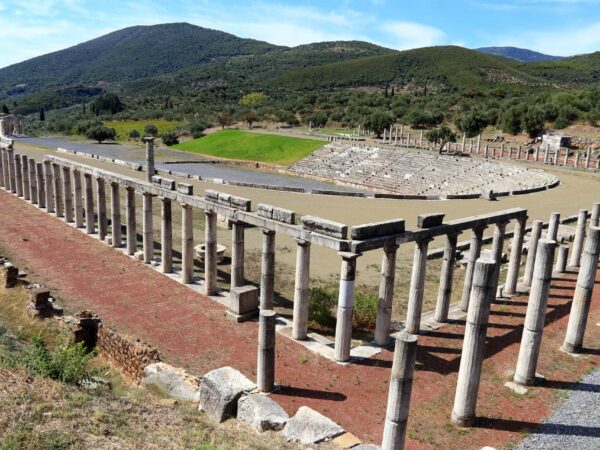
A four-story, Doric-style building, which is part of the Stadium and was used as a funerary monument for prominent citizens, who were buried with hero honors.
Arsinoe Fountain
Right next to the theater is the Arsinoe Fountain (named after the daughter of the mythical king of Messene Leucippus and mother of Asclepius). The water arrived here from the source of the Klepsydra, while the tank of the Fountain was 40 meters long.
Agora
The Agora, a vast square open-air area surrounded by arcades, was the center of daily life. So far, findings include remains of a representation of Zeus's winged thunderbolt and the sanctuary of Zeus Sotiros.
Asclepius
This area with its four internal arcades, which ended in a courtyard, is described by Pausanias more as an exhibition of bronze statues and other works of art than as an ordinary hospital of Asclepius, like those that have been discovered in other cities.
The Heroium
A four-story, Doric-style building, which is part of the Stadium and was used as a funerary monument for prominent citizens, who were buried with hero honors.
Arsinoe Fountain
Right next to the theater is the Arsinoe Fountain (named after the daughter of the mythical king of Messene Leucippus and mother of Asclepius). The water arrived here from the source of the Klepsydra, while the tank of the Fountain was 40 meters long.
The fortifications
The imposing walls of Ancient Messina once reached a length of 9 km. and were interrupted only by Mount Ithomi, which formed a natural "wall" around the city. One of the two entrances-monuments of Messina, the Arcadian Gate, is preserved to this day, along with six impressive towers.
The Stadium and the Gymnasium
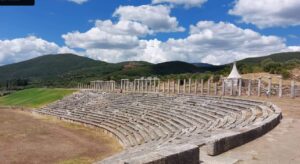
The well-preserved Stadium is one of the most impressive buildings and consists of 18 rows of seats, separated by stairs and surrounded by Doric arcades, within which the Gymnasium was housed.
How to get there
From Athens
By car: 230km (2 hours and 50 minutes)
From Kalamata airport
By car: 23km (30 minutes)
When to go
Ancient Messina is open to the public all year round (except national holidays).
During the summer months, it is best to avoid the midday hours of intense heat.
Archaeological Site & Museum: Seasonal opening hours apply, Open daily during the summer months from 8:00-20:00.
Duration & Tickets
You will need at least 3 hours to fully explore the Archaeological Site and Museum.
Useful information
You should bring a hat, sunscreen and water. Also, make sure to wear comfortable shoes.
There are no special facilities for people with disabilities. Visitors with mobility problems may not be able to explore the entire archaeological site.
Traditional taverns can be found in the nearby villages of Mavromati and Arsinoi.
If you are looking for a more intense "life" the city of Kalamata awaits you (50 minutes by car), with many possibilities for your accommodation.